
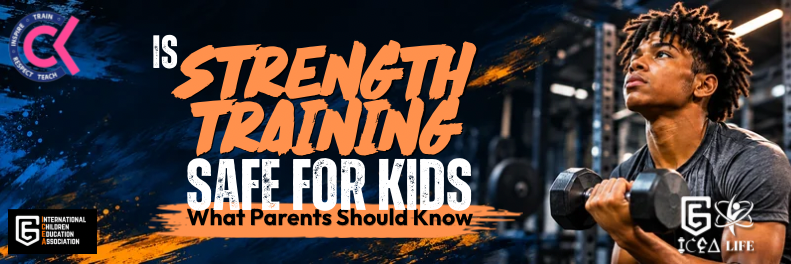
Is Strength Training Safe for Kids? What Parents Should Know
If your child has asked to start lifting, or a coach suggested adding strength work, there’s a good chance your first thought was: wait, is that actually safe?
It’s one of the most common questions parents ask me. And it makes sense. Most of us grew up hearing that kids shouldn’t lift weights, that it would stunt their growth or hurt their joints. Picture a kid strength training and a lot of people imagine a twelve year old under a heavy barbell, straining through every rep.
After 18 years of coaching kids and teens, here’s what I can tell you. Done right, strength training is one of the best things a growing body can do. Done wrong, it can absolutely cause problems. The difference comes down to how it’s taught, and who’s teaching it.
The Myth That Won’t Go Away
The idea that lifting stunts a child’s growth has been around for decades. It still comes up all the time, and it just doesn’t hold up.
The real risk was never strength training itself. It’s strength training done the wrong way: weights that are too heavy, sloppy form, no warmup, and no one watching. That’s when kids get hurt. And honestly, the same is true for adults.
Kids are also already doing strength work every day without anyone calling it that. Climbing the monkey bars, jumping off the couch, carrying a backpack, wrestling with a sibling. Their muscles, bones, and joints are handling load constantly. Structured strength training just takes that natural movement and teaches them to do it with control and good technique.
What Age Appropriate Strength Training Actually Looks Like
When I say strength training for kids, here’s what I actually mean.
It starts with their own bodyweight
Squats, lunges, pushups, planks, bear crawls, and jumps. Bodyweight exercises build a strong base and teach kids how to control their own body before anything else gets added. Plenty of kids can build real strength without ever touching a weight.
Then light tools, not heavy bars
Once a child moves well, we add things like resistance bands, light medicine balls, and light dumbbells. The weight stays light enough that they can do plenty of reps with clean form. If their form breaks down, the weight is too heavy, every time.
Form comes before everything
The first goal is never how much a child can lift. It’s whether they can do the movement the right way. Knees tracking over toes, a strong back, controlled speed. A child who learns great form at nine can keep training safely for the rest of their life.
A warmup every single time
Every session starts by getting the body ready to move, and ends with a cooldown. It’s one of the simplest habits we teach, and it matters.
Slow, steady progress
We add challenge a little at a time, as each child earns it. No rushing to heavier weights, no comparing to the kid next to them.
Always supervised
This is the big one. Kids should always strength train with a coach watching closely who knows how to correct their form in the moment.
What Strength Training Gives Kids Beyond Muscle
Parents usually come in thinking about strength. What they notice first is often everything else.
Better movement in every sport. Strong legs and a strong core make kids faster, more balanced, and more coordinated, whether they play soccer, dance, or just run around at recess.
A body that’s better prepared for sports. When kids learn to land, cut, and absorb force with control, their muscles and joints are better prepared for the demands of the sports they love.
Better posture. Kids spend a lot of the day hunched over desks and screens. Building a strong back and core helps them stand and sit taller.
Stronger bones. Growing kids build bone by putting their body under healthy load. Jumping, pushing, and lifting are part of how that happens.
Pride they can see. There’s something special about a kid who couldn’t do a single pushup in September doing ten in December. Strength is one of the clearest ways kids can see their own progress, and they light up when they do.
Red Flags: When Strength Training Is Done Wrong
Not every program or gym is set up for kids. If you see any of these, it’s worth asking questions or looking elsewhere.
Kids maxing out. Testing how much a child can lift once, at their absolute limit, has no place in youth training.
Adult workouts handed to kids. A routine built for a grown adult isn’t built for a growing body.
Form that gets ignored. If a coach lets rounded backs and wobbly knees slide to get more reps in, that’s a problem.
No one watching closely. Kids left alone with equipment, or a single coach trying to watch a large group, is how mistakes happen.
Pushing through pain. Soreness after a new workout is normal. Sharp pain or pain in a joint is a signal to stop, and a good coach listens.
Pressure to keep up. When kids compete with each other on how much they lift, they start chasing numbers instead of technique.
What About Teens?
The teen years are when a lot of kids get serious about strength, especially athletes. It’s also when the temptation to copy workouts from social media kicks in.
Teens who have built a solid foundation can gradually work with heavier weights and more advanced lifts. But the rules don’t change: form first, steady progress, and a coach who knows what they’re doing. A teen who learns to lift well now is setting themselves up for years of safe training. A teen who learns from viral videos is often setting themselves up for a sore back.
This is also where youth strength and conditioning becomes about more than the weight room. Teens who train with a coach they trust tend to carry that discipline and confidence into their sport, their schoolwork, and how they handle pressure.
How We Teach Strength at Coach Kee’s
Strength is a big part of what we do, and safety is built into every piece of it.
Every session follows the same rhythm: a greeting, a full warmup, structured strength and movement challenges with clear goals, and a cooldown. Classes stay small, 6 to 10 kids, so a coach is always close enough to correct form in the moment. Younger kids build a foundation with bodyweight and fun, game based challenges. Older kids and teens progress to bands, medicine balls, and dumbbells as their technique earns it.
We never chase numbers. We chase good movement, steady progress, and kids who leave feeling stronger than when they walked in. For teens who want more focused work, we also offer personal training at our Tarzana location.
And because we take a 360 approach, strength training is never just about muscle. It’s one of the best tools we have for building confidence, focus, and discipline, including for kids with ADHD and other kids who learn and move differently.
Signs Your Child Is Ready to Start
Age matters less than readiness. Your child might be ready for structured strength training if:
- ➔They can follow directions from a coach and focus for a full session.
- ➔They’re curious about getting stronger or keep asking about lifting.
- ➔They play a sport and want to get better at it.
- ➔They have lots of energy and love a physical challenge.
- ➔They get frustrated keeping up with friends or teammates physically.
- ➔They’re about to start lifting anyway, and you’d rather they learn it right.
That last one matters more than parents think. Many teens will find their way to a weight room eventually. Learning from a coach first makes all the difference.
Serving Families Across the San Fernando Valley
We work with families in Encino, Tarzana, Sherman Oaks, Studio City, Woodland Hills, Calabasas, and the surrounding San Fernando Valley. If you’ve been looking for safe strength training for kids or a personal trainer for your teen in Encino or Tarzana, we’d love to meet your family.
Frequently Asked Questions
Help Your Child Get Stronger the Right Way
Strength training can be one of the best things your child ever learns, as long as it’s taught the right way from day one. Every new child starts with a free fitness assessment. We see how your child moves, talk about their goals, and build a plan that’s safe and right for their age and experience.
Schedule Your Free Assessment No commitment required. Just a conversation.Strong kids aren’t built overnight. They’re built one good rep at a time.
