
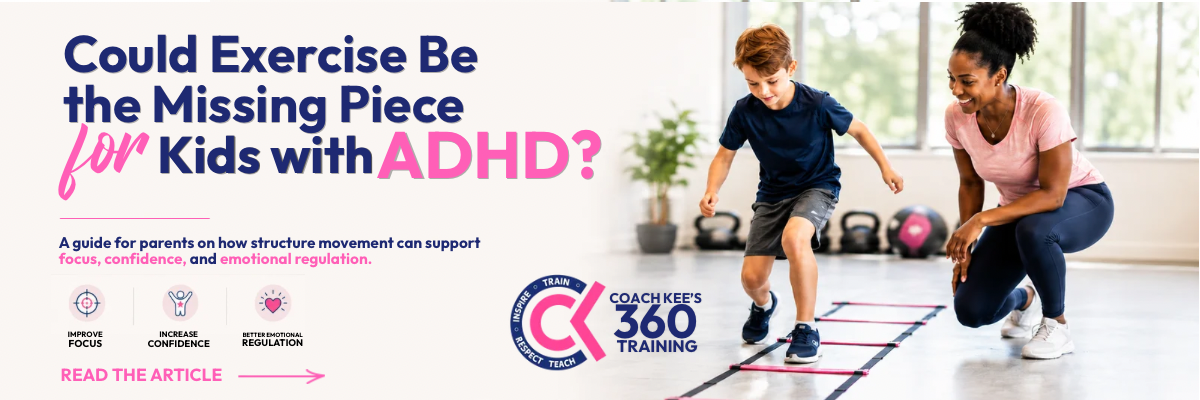
Could Exercise Be the Missing Piece for Kids with ADHD?
ADHD gets talked about almost exclusively as a focus problem.
After 18 years of working with children every single day, I have come to believe that one of the most overlooked pieces of the conversation is exercise. Specifically, structured exercise for kids with ADHD that is designed around how they actually work, not how we wish they would sit still.
Not in the way most people assume. Not simply because kids with ADHD need to run around and burn off steam. But in my experience, children who have a consistent, structured physical outlet tend to feel more settled overall. When that outlet is missing, everything else tends to get harder. When it is in place, something shifts.
That shift is what I have spent nearly two decades watching happen. And that is the reason I wrote this.
If you are a parent raising a child with ADHD, you have probably tried a lot of things. You have sat in offices. You have read the books. You have downloaded the apps and tried the reward charts. Some of it helps. Some of it does not. And on the hard days, it can feel like you are running out of options.
What Parents of Kids with ADHD Are Really Dealing With
I want to say something to every parent reading this before we go any further.
You are not doing it wrong.
Raising a child with ADHD is genuinely one of the most demanding things a parent can take on. These kids are not difficult because something is wrong with them. They are wired differently, they experience the world at a higher intensity, and they need more from their environment to feel okay. When that need is not met, you see it at home. Big emotions. Meltdowns out of nowhere. A child who cannot seem to settle no matter what you try.
While therapy and medical care play an important role for many children, what I have found over the years is that physical activity and ADHD management often go hand in hand in ways that do not get talked about enough. Structured movement is one of the most overlooked pieces. And it is one of the most accessible ones too.
Exercise for Kids with ADHD: Why It Works Differently
Many kids with ADHD seem to thrive on stimulation and physical input. When they do not find that outlet, they create it in other ways. That is often where the fidgeting, the interrupting, the bouncing off walls comes from. Their body is looking for something.
Exercise for kids with ADHD is one way to meet that need. When a child moves with intention, with a clear goal and a structure around them, many parents tell me that their child seems more settled afterward. The body had a job to do and the mind followed.
One thing I have noticed over the years is that many kids with ADHD seem to struggle most during transitions. School ends. Homework begins. Bedtime approaches. They are constantly being asked to shift gears, and that is often when parents see frustration, resistance, or emotional outbursts.
Movement can help bridge those transitions.
When a child spends most of the day trying to focus, sit still, follow directions, and manage their impulses, they often have a lot of energy and tension built up by the time they get home. Structured physical activity gives them an outlet for that energy while also providing something many ADHD kids thrive on: clear expectations, immediate feedback, and a sense of accomplishment.
It is also important to understand that not all exercise is created equal. Some children do well in large team sports. Others become overwhelmed by the noise, unpredictability, and downtime. Many of the kids I work with thrive in environments where they know exactly what comes next, where they are actively engaged, and where they have a coach who understands how they learn.
That is why structure matters just as much as movement. It is not simply about keeping kids busy. It is about giving them an environment where they can succeed.
Beyond the physical outlet, movement also gives kids something that ADHD tends to make hard to find elsewhere. Routine. Confidence. Body awareness. The experience of setting a small goal and reaching it. These are not side effects of fitness. For many kids with ADHD they are the main event. When a child learns that their body is capable, that they can show up consistently and improve, that belief does not stay in the gym. It follows them into the classroom, into their relationships, and into how they handle hard days.
This is not a quick fix. Nothing worth having is. But parents who commit to consistent structured movement for their child often share similar observations after a few weeks. They feel calmer at home. Homework is less of a battle. Sleep improves. They are more talkative and less reactive. Something feels different.
That something is this.
Why Most Fitness Programs Do Not Work for These Kids
Drop a child with ADHD into a large, loud fitness class with twenty other kids and a rotating cast of coaches and see what happens. Chaos on top of chaos. Overstimulation. No clear expectations. No relationship with the instructor. No reason to trust the environment.
It does not work. And when it does not work, parents blame themselves or blame the child. Neither is fair.
The issue is not that kids with ADHD cannot handle physical activity. The issue is that the environment was never designed for them.
Kids with ADHD need to know what is coming. They need consistency. They need a coach who actually knows them and can read when they are overwhelmed before it becomes a problem. They need small groups where they can be seen, not lost in the crowd. And they need sessions that are structured enough to feel safe but engaging enough to hold their attention.
That is a very specific thing. Most fitness programs are not built to deliver it. A real ADHD fitness program looks a lot different from a standard kids class.
What a Session Actually Looks Like
Every class in my program has a rhythm to it. Kids know what to expect when they walk in. There is a greeting, a warmup, a sequence of movements with clear goals, and a cooldown. That predictability is not boring. For a child with ADHD it is grounding.
Our classes max out at 6 to 10 kids. That is intentional and we will never change it. In a group that size, every child gets genuine attention. I know their names, their quirks, what makes them light up, and what throws them off. There is no hiding in the back. There is no getting lost. Every kid is seen every single time.
Within that structure, kids who were written off in other programs start to shine. They are not too much here. Their energy is exactly right for what we are doing. And when a child starts to believe that about themselves, you cannot overstate what that does for everything else in their life.
What Parents Start Noticing at Home
The changes that happen inside the gym start showing up outside of it. Parents notice it first in the evenings after a session. Their child is calmer. More conversational. Less reactive. Over weeks, that starts to carry into school days, into family dinners, into the morning routine.
This is the whole child approach we take. We are not just training bodies. We are building confidence, consistency, and a relationship with movement that these kids can carry with them for life. When a child learns that their body is capable, that they can set a goal and reach it, that showing up and trying is something to be proud of, that lesson goes far beyond fitness.
It goes into how they handle a hard day at school. How they talk to their siblings. How they see themselves when things get difficult.
That is what we are really building here.
Signs Your Child Might Be Ready
You do not need a formal diagnosis to benefit from structured fitness for kids with ADHD tendencies. If your child checks any of these boxes regularly, it might be worth exploring.
- ➔They have a hard time settling after school and need a long time to decompress.
- ➔They seek out physical activity constantly and get frustrated when they have to be still.
- ➔They respond better to instructions when movement is involved.
- ➔They have big emotional reactions that come quickly and pass just as fast.
- ➔They do noticeably better on days when they have had some kind of physical activity.
- ➔They struggle in large group settings but do better in smaller, more focused ones.
These are not problems. These are signals. Your child is telling you what helps them.
Many parents already notice this pattern without realizing it. Their child has a great day after swimming, riding a bike, hiking, or attending a structured activity. Then a few days go by without movement and things become more challenging again. Paying attention to those patterns can tell you a lot about what your child needs.
Serving Families Across the San Fernando Valley
Our program is based in Encino and Tarzana and we work with families from all across the area. If you are in Sherman Oaks, Studio City, Woodland Hills, Calabasas, or the surrounding communities, you are close enough to make this work.
Parents drive from all over the San Fernando Valley because there are not many programs built the way ours is. The small class sizes, the holistic approach, and the focus on kids who learn and move differently make it something families tell us they could not find anywhere else nearby.
If you have been searching for fitness for kids with ADHD in Encino or the surrounding area and kept coming up empty, this is what you were looking for.
Frequently Asked Questions
Ready to Take the Next Step?
Our NeuroDivergent classes at Coach Kee’s 360 Training were built specifically for kids who learn, move, and process the world differently. Every new child starts with a free fitness assessment. Not a template. A real plan for your real kid.
Schedule Your Free Assessment No commitment required. Just a conversation.You have been showing up for your child every single day. This might be the thing that makes all of it a little easier.
